
There’s Not Enough Hours in the Day…

2013-03-22 22.15.13“Burning the candle at both ends—and running out of candle!”

Well, that’s how I have  felt these past five months. I finished my latest novel AMAZON MOON in December and a good friend, international best-selling author Nicholas Guild read the work and provided excellent recommendations. All I have to do is find enough hours in the day to make the modifications he suggested then the novel will be ready to move into publication.

The problem is that as Nick was receiving AMAZON MOON, I was asked to be the Security Director for a major industrial port. The previous Security Director had left for another job and they needed someone to handle operations and their large number of federal grant projects. Having retired as a Security Manager of a global oil corporation, this wasn’t my first rodeo.  I refused the position full-time and said I would work for six months until they found a replacement. I also continue (it’s in my contract to allow me so) to volunteer working with school children each Tuesday to assist them with their reading skills. And (of course there’s more), along with my writings, I am the Secretary of my Masonic Lodge (a full-time position which I do in my “spare” time.)

I had a perfect storm of events collide.  Suddenly, my book was ready to finalize, and I was up to my ears in a super tight schedule. Working with federal grant projects is about as enjoyable as performing a “Do-It-Yourself Root Canal,” plus the remainder of the security operations cannot be ignored. I have two Monday’s every week because I work Monday, am off Tuesday to work with the school kids, then return to work Wednesday (which feels like my second Monday because I’m trying to catch up from what I missed Tuesday.) I’m not totally off work on Tuesdays either because I still 2013-02-04 20.39.40receive cellphone calls and have to jump on my laptop throughout the day to keep my workload flowing. And somewhere between all of that, my lodge duties come into play, plus I must write a monthly newsletter…more paperwork headaches.

As every author knows, maintaining a social media presence demands allotting time per day to various sites (particularly your own website.) If you don’t keep your published works out before the public, you are quickly forgotten. Fortunately, my author friends help keep me alive in those arenas by giving me an occasional plug. The indie community is truly wonderful! People on the opposite side of the world that you’ve never met become great friends.

But as all storms do, this one in my life shall pass too. At the end of May, my contract as Security Director will be complete. The school year will come to a close as well. And the lodge work, well, that  will remain. Most importantly, I will return full force to my writings, finalize AMAZON MOON  then begin the novels still patiently waiting within me to be written.

Now, if I can just find enough candle to burn until the storm passes…

GLENN


A WRITER’S DILEMMA

 Micheal Rivers is best known as being a genuinely talented author of paranormal thrillers and true friend to the indie world. I’ve read several of his novels, truly enjoyed them, and I am quite fortunate to personally know such a fine gentleman. Previously, Nicholas Guild, a best-selling, international author, was kind enough to write a guest post for my site’s readers. Today, I am proud to include one by Micheal Rivers in my treasure chest of writing jewels. Whether you’re a seasoned novelist or novice, there is definitely something to learn from Mr. Rivers’ article.

A WRITER’S DILEMMA

Micheal Rivers

A writer is a wonderful individual. Throughout the centuries mankind has borrowed, purchased and cajoled anything they possibly could to either educate themselves or entertain themselves through books. Whether you are highly educated or you are just a beginning reader you will find enjoyment within the pages of a book. 

Let’s take a look at writing and how it is accomplished. I will use the works of fiction for this topic. Fiction is tool for the entertainment of readers, but it too has rules that need to be followed to be successful.

A novice writer may or may not realize how much preparation goes into a single work of fiction. Just as if you are writing non-fiction you have to research your subject matter. For every great work of fiction lies the grain of truth. Poor research on your subject will carry you into a story that is not plausible in any state and will destroy any efforts you have put into the book very quickly.

In your research the characters must remain in their original state, such as their manner of speech, or the way they conduct themselves. A sudden change in the character’s development will result in the destruction of what you have already introduced your reader to. The reader will keep this in mind and begin to automatically distrust the rest of the story regardless of its worth. This will come back to you when a book is reviewed by the public. Which would you rather have, a four or five star review or a two star stating your story is good but the characters lack substance?

A well written story will engross the reader to such a point minor mistakes may be overlooked to an extent. This being said I research my books almost to a fault. Trust me; you will still have readers to disagree due to their lack of research about what they doubt concerning what you have written.

 Many of your best writers place themselves in the story written from a witness’s point of view. You must distance yourself from that aspect unless you are capable of writing the story with a nonpartisan aspect. It is difficult but not impossible for newer writers in the field.

One of the biggest mistakes a new writer will make is believing he has written the perfect novel and will be beloved among his fellow authors. Usually his editing in his zeal for perfection is his death knell. A professional editor is a mandatory necessity. Although you have done this you will still find minor mistakes, the more eyes on your manuscript the better off you are. This is not saying release it to the public for scrutiny, far from it. Your objective is to give the reader the best story you possibly can and retain your style. Some editors will attempt to change things in your story which not only does not fit and cause hours of rewrites, but will also cause you to lose what your readers love about your stories. If your first release is poorly edited because you trusted your publisher, it is not the fault of the publisher. The final release is your responsibility and that story will come back to haunt you for years to come.

Do your words flow across the page or do they read as a conglomeration of statements? It will make a very large difference as to how your story will be perceived by a wide audience. You must remember the reader cannot read your thoughts or see what you are envisioning. You must lead him by the hand into a world you have created. Let him see what you see. Do your characters and settings induce emotional responses? This is very important also and must coordinate with the flow of the sentences.

I have dozens of people ask me who the protagonist is in a story. I neither build characters or protagonist. I, personally consider myself to build people, someone you can identify with if necessary. A person in a story cannot carry the story alone, just as in real life there is always somebody to share the burden in some form. This is only one point of view and I am sure there will be those who differ in opinion. I am happy with that; it makes the world a little brighter.

 If you succeed in getting the reader to understand your character, good or bad, you have succeeded in bringing the character to life. Written correctly he or she can become as three dimensional as you wish them to be. Rhyme and reason will take you far. 

Visit Micheal Rivers site at http://www.MichealRivers.com to learn more about him.


My Journey With Amazon Moon

After a long year I recently completed the first draft of Amazon Moon. The first full edit went fairly smooth, or at least as painless as I could make it. Now I’m patiently awaiting replies from a few beta  readers and then will go through the novel once more to finalize it.

The writing of Amazon Moon has truly been an interesting, personal journey for me as an author. I set out upon the path of wanting to write a good, action-adventure story with a bit of sci-fi set in the deep, mysterious Amazonia region—and ended with a discovery of evils that I did not know so fully existed.

The goal of every author is to be a good storyteller, yet as writers, we hold a responsibility to educate our readers as well about certain facts as we move them through chapters until the end. Such responsibility was better understood by me once my protagonist, John Alvarez, entered the rain forest.

A psychologist might have a field day analyzing John; the boy who longed for love, became lost within himself when his family was lost to him, yet as a man, eventually found a home within the Marine Corps to anchor his soul to. He learned warfare well, possibly too well. That could be debated, and then came the insanity thrust upon him by having to doubt the truths of all he has learned to date once in the rain forest. But as I wrote this novel, John Alvarez took a slightly different path in his life than I originally intended. The variation began when he met the indigenous people of the Amazon and discovered their plights.

Simply saying, “the Amazon,” invokes images of thick jungle, wild animals, hidden tribes, and the immediate setting of danger at every turn. It’s one of the last bastions of immense territory in the world yet to be fully explored. Yet, with all its hazards and menace, we owe so much to this region.

The bio-diversity of the Amazonia rain forest is vital to our eco-system and pharmaceuticals. Climate change is heavily dependent upon it and we need the forest to keep it in balance. Over two-thirds of all mass produced drugs are derived from medicinal plants. In the Amazon, 650 species of plants with pharmaceutical value have been discovered. Gold, oil, and other resources are within this region as well. The value of the rain forest is immense, and it is home to many indigenous Indian tribes. 

The history overall of the Amazon is fascinating and truly worthy of reading. But it is saddening as well, often to the point of being comparable to what our Native American Indians endured as the government and gold seekers chose to steal their rich lands.

There may be predatory creatures in the Amazon—black caiman, jaguar, cougar, piranha, viperous bushmaster snakes and monstrous anacondas—but none so vile and vicious as the “civilized” men and governments who decided they wanted to drive the tribes out in order to fill their pockets from the sale of the region’s rich resources.

Every country the Amazonia region touches is guilty in one form or another of injustices against the indigenous tribes. That in itself should be an embarrassment to mankind, yet little has been done by governments to protect these native people or the Amazon. What has been done is nothing more than creating a façade to display to the world.

 Imagine if your family lived in a rain forest village under primitive conditions. In addition to the daily struggles to provide food for your family, you must be concerned with brutal Maoist guerilla factions such as the Shining Path traveling through your land; drug cartels and trafficking, their soldiers killing anyone they find in order to protect their drugs; land grabbers and ‘loggers’ raping and savagely killing your loved ones then burning your village to the ground because they want the trees for lumber—or the gold seekers who murder villagers in order to stake a claim and destroy the land as they mine for gold. But worse, is when governments such as the Peruvian government use their military to bomb your village and then send in militia to drive you out.

The indigenous tribes of Amazonia once numbered in the thousands, now due to civilized society’s gifts of rape, torture, murder, infectious diseases, venereal diseases, and violent land grabbing, some tribes are near extinction and fragmented while others only number in the hundreds.

Does this all sound painfully similar to our own embarrassing United States history in the dealings with Native American Indians? Unfortunately, it is almost verbatim.

In one disgusting account, I read that loggers used a different approach to rid themselves of a tribe. They donated clothes to the tribe. It sounds quite peaceful and generous until it was discovered that the clothes had all been worn by people sick with small pox and other infectious diseases—then was intentionally given to the Indians. The outcome was as expected by the loggers. The majority of the tribe died.

I read one news report of loggers burning an eight years old village child to death. They caught the girl, tied her to a tree then set fire to her while she was alive. It was part of their tactic to force the tribe off their land so the timber could be taken. The government was still investigating and said they believed it never happened although they did not discuss the tribes that have been almost massacred by loggers.

It would take a novel to fully tell of the injustices alone performed and being performed today on the Amazonia tribes. My hope with this article is to inform readers there are far more stories to be known than what I have now written. 

I encourage you to seek out the information and read it for yourself. Use the Internet and search for “indigenous tribes of the Amazon” then begin reading about the atrocities committed against them. Perform a search on “rainforest loggers” and “Amazon gold miners” and see for yourself the volumes of real-life horror stories that will appear.

When Amazon Moon is published in the future, I hope you will enjoy its action filled, adventurous story, as well as my other presently published novels.  But I hope most of all you will continue reading about the Amazon itself.

One day mankind may learn to not repeat the mistakes we have made throughout history. For now, I doubt so.

Sincerely,

Glenn

THE CHARACTER OF CHARACTER – an article by author Nicholas Guild

 Glenn’s Note: I have always stated Nicholas Guild is one of the few select authors I consider as my mentor of the writing craft. After all, one should choose the best to learn from. He’s been writing since 1975, has been published around the world with many of his works being international bestsellers, and as Publishers Weekly described him, is “…a master of timing, plot and style.” From The New York Times Book Review to the Washington Post, Nicholas Guild has received accolades aspiring writers dream of, and published authors wish for. I’m honored to present this article written by him for my website. His generosity in setting time aside to do so during his hectic schedule is truly appreciated. There is much to learn from my friend and I hope you will enjoy this as I did.

THE CHARACTER OF CHARACTER  by Nicholas Guild

When I was teaching literature I had a colleague who liked to say, “There are no characters in fiction, only words,” and at the most literal level he was, of course, correct.  A novel is merely another species of rhetorical performance, and when we read a story nothing happens in the world outside our nervous systems.  We are only processing words.

The problem is that my colleague’s maxim is only literally true.  It does not correspond to the ways people, both readers and writers, experience fiction.  There is what Coleridge called “the willing suspension of disbelief.”  We know, for example, that Elizabeth Bennett and Darcy are not real people and therefore they never actually fall in love, yet we always experience relief and pleasure when at last they come to a right understanding of each other.  When we talk about any particular novel or story we talk about the characters as if they were real because on some level they are real for us.  There is even a certain amount of neurological evidence that readers experience fiction in much the same way that we all experience real life, and with something like the same intensity. 

And when we talk about characters in fiction we are not far from the way we use the word “character” in real life.  For instance, when we describe some real person as a “character” we are referring to a bundle of behavioral quirks that distinguish that person.  Our impression of that person is defined by peculiarities of speech, dress, behavior, appearance, etc. which he or she exhibits.  Thus in our imagination Theodore Roosevelt always has pince-nez glasses, a walrus moustache and, when he smiles, enormous teeth—and he is always describing things as “bully”.

Comic characters frequently have “character” in this sense.  Mr. Micawber in David Copperfield always speaks with a comic formality which is instantly recognizable and is always waiting for “something to turn up.”  Mr. Collins in Pride and Prejudice is always expatiating on the wealth, grandeur and “condescension” of his patroness Lady Catherine de Bourgh.  Mammy Yokum in Li’l Abner of blessed memory always smokes a pipe, ends every discussion with the words “Ah has spoken!” and could have beaten Jack Dempsey to a pulp.  Such characters are usually what E.M. Forster described as “flat”—two dimensional and with no psychological depth, no more than the sum of their mannerisms.

Of course not all flat characters are comic.  Television abounds with heroic types who are essentially flat.  My personal favorite was always Steve McGarrett of Hawaii 5-O (if anyone remembers that series).  He had a vocabulary of about four words—“Book ‘em.  Murder One!”—and it is impossible to imagine what his childhood would have been like.  But generally speaking we expect non-comic characters in fiction to have a little more depth.  To use Forster’s term, we expect them to be “round”.

Round characters are those we can imagine having an inner life.  They are allowed, even expected, to exhibit contradictions.  They are human the way we are human.


But to my mind there is one possible difference.  Our sense of “character” in fiction is in many ways close to another way we use the word in real life, which is essentially moral.  We speak of people as possessing “character” as an attribute, like eye color.  George VI of England showed “character” during World War II by identifying himself personally with the goal of victory.  He refused to let his family seek safety in Canada and he made it clear he would not come to any kind of terms with the Germans, even if England were overrun and occupied.  He was prepared, apparently, to fight to his dying breath, and thus he revealed—or appeared to reveal—the core of his nature.expected, to exhibit contradictions.  They are human they way we are human.

It is open to question whether any of us really have such unified personalities.  Perhaps all we have are random clusters of impulses.  I don’t pretend to know.  But such unity is precisely what we expect to find in fictional characters.

Of course fictional characters have the advantage of being knowable in a way real people simply are not.

Our knowledge of the external world, and that includes our knowledge of other people, comes through the senses.  We see other people, we hear them, we touch, smell and sometimes even taste them.  Yet we are constantly being blindsided by our fellow mortals and discovering that the person we thought we knew doesn’t exist, is actually another sort of person altogether, and the reason this happens is not difficult to discover.

What do we actually know about anyone else’s inner life?  Only what they choose to show us, or let slip—in other words, a highly edited version.

But characters in fiction are open to us.  The author, who created them, tells us what they are thinking, sometimes even gives us a transcript.  Their desires and anxieties are, quite literally, an open book to us.  Therefore it is possible for us to know that core we think of as the essence of each person’s private humanity.

Thus, while we only intermittently judge each other, our moral judgments of characters in fiction are relentless.  It is a point writers forget at their peril:  readers read from within the context of their most conservative morality.

It is also worth remembering that controlling the sympathy of a reader is a complicated business.  Think of the reader as resembling a bull wearing blinders and a ring in its nose.  It can only see straight ahead, and straight ahead is a direction you control.  The writer creates an imaginary world and all the reader can experience of it is what he or she is shown.  The writer is in control, so he or she had better be careful.

A student of mine once wrote a story about the interior life of a girl in a coma.  The problem was that the girl had reached this state by mixing drugs and alcohol, which my student seemed to regard as the moral equivalent of being struck by lightning.  It took me a while to convince her that the reader would judge her character negatively and that this would affect the impact of the story in ways she hadn’t anticipated and didn’t want.

That was the sort of oversight which hopefully is restricted to the very young (my student, as I remember, was nineteen).  Every writer wants the reader to be on the side of their hero or heroine.  But the same considerations apply when you are creating a villain.

Villains are tough.  If you make them too evil the reader will lose interest.  Thus you have to make your villains credibly human.  Why do they do all those terrible things?  What do they want?  The essence of the thing is that everyone has a point of view, even Jack the Ripper and Adolf Hitler, and real people are more interesting than monsters.  The reader needs at least to understand the bad guy, so always provide him with a backstory.

End of sermon.

SOLOMON’S MEN – MWSA 2012 Conference Finalist

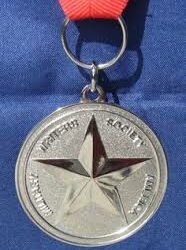
It was a wonderful surprise and honor to receive an email from Joyce Faulkner, President of the Military Writers Society of America, which said: “Congratulations, Glenn! Your novel “Solomon’s Men” has been nominated as a finalist in the Mystery/Thriller genre of our 2012 Conference…” 

I say ‘surprise’ because that is exactly what it was… “Solomon’s Men” had been reviewed by a MWSA reviewer and received a very nice write-up which is posted on Amazon and Goodreads websites. Unknown to me, the reviewer entered my work in their upcoming conference to be held in September at Dayton, Ohio. MWSA yearly reviews hundreds of books and to be selected as a finalist is an honor in itself for me.

  The Military Writers Society of America is an organization with a large membership of current and former military personnel, as well as persons related and connected with the military services in some manner. The writers in the organization, and the categories and volumes of books you will find in MWSA is phenomenal. If you are a historian, served in the military, are researching wars your loved ones served in, or simply looking for good books of any genre to read, then Military Writers Society of America is for you. I highly recommend you stop in and browse the site, especially if you are a veteran. There are a lot of discussions on many topics of interest.

And if you are on Goodreads, visit the MWSA Awards 2012 Nominees list of books and click a vote for “Solomon’s Men.” This has nothing to do with the conference awards, but is for recognition of the books.

Now comes the waiting to learn the final outcome of the nomination. To be recognized by MWSA is honor enough…winning the category will be the icing on the cake.

T.G.I.A. — Working the Streets….

 There are times when reality hits home, gives you a wake-up call, and leaves you with the realization the dirty side of life still exists even though you may have forgotten or chose to ignore it. Some people don’t have the luxury to forget. They work it every day, seemingly living it because they must. It’s their job. Such are the men and women of the T.G.I.A., Texas Gang Investigators Association.

After reading my novels, Mr. Paul Zamarripa, T.G.I.A. South Region Director, Position 1, contacted and invited me to attend their conference in San Antonio, Texas. That was quite an honor for me. Considering my former experience as a law enforcement officer, he believed it would be a good opportunity to present something different to the attendees; have me sign my books, talk with everyone, and allow them to see there can be life outside of their daily jobs which are mentally grueling.

Of course I accepted! What author wouldn’t? So for two full days I signed books, met old friends, people engaged in gang investigations and enforcement, and made new friends – one of which was Mr. Zamarripa.

Were the 750 conference attendees all cops? No.  They ranged from federal agencies of all levels, constables, state, county and municipal law enforcement, and parole/probation officers to school counselors and court administration. Yes, I probably missed someone in that list of attendees. But as you can see, it takes such a spectrum of people, working hand in hand, to address today’s growing problems with gangs.

There was a time long, long ago when you said the word “gangs” and only images of leather-vested motorcycle riders and teenagers in neighborhoods with aerosol paint cans came to mind.  The majority of the public never came in contact with them.  Fast forward ahead and now everyone across our nation and in foreign countries is infected with a mounting crime rate rising from street thug gangs to violent drug cartel involvement. Big cities to small country towns, the types of crimes related to them seems endless: theft, burglary, drugs, rape, prostitution, kidnapping, assault, murder, and so on. And there are no barriers when it comes to age and social economic status as well. Children to adults are recruited, and the poor from slums and barrios to the college educated crowd living in well-to-do neighborhoods are brought into the fold.

What lies at the base of the gang problem? Money, economics; the list of reasons continues but those two are the meat and potatoes of the issue. And solving gang problems that have such far reaching tentacles into the criminal underworld often feels as if you are at the beach trying to hold back the waves of the ocean. 

When drug cartels have enough money to recruit whole units of deserters from Mexican Army special forces units to do their violent bidding, they certainly have no qualms in hiring stateside ‘wannabe-gangstas’ or organized gangs to run dope and make hits on selected targets. Doing so keeps the cartel’s hands clean.

This is where the men and women of the T.G.I.A. come into play. They don’t just work ‘9 to 5’ and walk away at the end of the day. They live it ‘24-7’ and shift between the cruelties of the gang world and their home life, constantly struggling to maintain their sanity and a positive outlook on society.  Their phones ring day and night and they are often called away for investigations while enjoying a little time with family. That’s one reason divorce rates are high in police work. While I was at the conference I listened to probation officers getting calls about parole violators, and investigators talking to patrol officers about certain ‘tats’ on a suspect.

  Conferences are important for several reasons – networking, sharing intel, learning from one another – earning educational hours required by the State of Texas as part of their continuing education to retain their licenses – but to me, most of all, it gives them some down time to clear their heads, especially when you are not working undercover and feel you need to always dress the part of being a gang member. Like patrol officers and detectives working the streets, it’s easy to get wrapped up in the ‘us versus them’ syndrome whereby it’s the police against everyone outside of law enforcement because all you see is the crap side of life and wonder if anyone good is left other than another cop.

The stories these people can tell you about gang violence and activities and working the streets would make most authors’ crime novels look like kindergarten books.

Take the time to browse various websites of your local law enforcement such as Stop Houston Gangs and related associations such as the T.G.I.A. Read about the crimes gangs commit and how they operate. See for yourself how big the problems truly are. After all, the end product of their criminal acts affects your tax dollars!

What can you do to help? First, start by telling your children they are loved – and talk to them. Have conversations with them about problems they see and may be confronted with in school or in the neighborhood. Don’t wait until your children are teenagers. Start talking to them when they are much younger.

Gangs are a subject which could be studied for semesters in a classroom setting and you still wouldn’t learn all there is to know. So my hat’s off to the members of the TGIA, as well as all law enforcement related personnel, for their commitment to keeping our streets clean.

And my thanks to Mr. Paul Zamarippa for the invitation which allowed me to learn about this association.

Glenn

The Legacy Continues…Nicholas Guild is Back!

   I’ve been away from my computer for several days. I needed time to think about my writing path, plus a long list of unattended activities demanded attention. Sometimes a writer needs a break in the form of physical work. It helps clear your head and allows you to refocus on your overall efforts.

On March 4th I wrote the article Missing in Action, Part 1: Author Nicholas Guild, “The Assyrian”.  He’s the one author I’ve always considered the finest example of a true historical fiction writer. I wrote the article and never anticipated Nicholas Guild would read it. After all, here was an esteemed author who left the literary world with awards, accolades, and multiple published books that have been translated into several languages. Guild has never heard of me and I seriously doubt if he’s even seen my works or my website.

But today, as I returned home after finishing a number of tasks, for some reason I began to think of Mr. Guild and my article about him.  I thought of how my break of several days away from writing had let me realize the urge, the desire to create, still remained and was as strong as ever.  It was all passing thoughts, the kind you have when you’re tired, sweaty, and need a good shower. Yes, maybe Nicholas Guild just needed a break himself, only he was taking a much longer one than me.

Now, true story: After I showered, poured a cup of hot, fresh coffee and grabbed a cup full of my grandson’s favorite Honey Graham ‘Teddy’ Crackers to munch on (you know, those little bear snacks you can’t stop eating), I sat at my computer to check my website for comments awaiting approval.  With the graham cracker container sitting next to my coffee cup, and my left hand steadily reaching in to get a cracker while I’m reading the monitor and my right hand is feverishly working the mouse, I suddenly realized I was reading a comment from Nicholas Guild—‘the’ Nicholas Guild—and that was when I reached deep into my hot cup of coffee instead of the cracker cup. With coffee flying everywhere, me flailing my hand through the air and yelling things I was glad my grandson wasn’t around to hear, I jumped out of my chair.  I couldn’t believe it. First, that I had done such a stupid act, and second, that Guild had actually responded to my blog.

   Rushing to wash my hands and wipe coffee off my monitor screen and desk, I finally was able to return my attention to his comment:

May 26 2012 Nicholas Guild  I just read your highly flattering blog. Thank you for the kind words. I thought I’d let you know that I’m back in front of my word processor and I have a new book out in ebook form, “The Moonlight,” which is a sort of ghost story. I’m now working on another historical, set in 4th Century B.C. Greece.

Yes, after reading it four times, the words had not changed and the name remained the same—and for the sake of personal safety I moved the coffee to the opposite side of my desk. I guess God works in mysterious ways and this was His way of telling me to return to my writings. But, now how do I respond to a man I’ve always wanted to talk to without sounding like a blithering idiot? I just finger dunked my coffee cup so that spoke well of my mental faculties. During the years I performed Executive Protection, I worked with a lot of big names and heavy hitters, but here was someone I truly respected for many reasons.  So I typed, then deleted, typed, deleted, and finally arrived at this:

May 31 2012  Glenn   Mr. Guild, very few things surprise me anymore but seeing comments from you truly did! Your return to writing is great news and I look forward to reading more of your work. I wish you the best in all of your endeavors.

After clicking the reply button, I sat waiting for a comment to appear as if he were on the other end ready to respond immediately. What can I say? I think he is an excellent author and I was extremely happy to have received his comments to my article.

Nicholas Guild has his first ebook “The Moonlight” now out – and it’s his first try at horror. In addition to that, he is working on another historical—the first in many years. I went to his website, downloaded a sample of “The Moonlight” and intend to read it tomorrow. Nicholas Guild is returning to his writings, life is good, and my burned fingers will eventually heal….

There are a lot of lessons to be learned in this, aside from keeping crackers and coffee apart from one another while you read. We’re all human, with shortcomings, personal faults, and problems that stir our souls. Guild was at the top of his game when he chose to take a break for whatever reasons. But he returned to writing because it’s simply in his blood to create. He may have left for a while to go teach, yet he returned. I returned to my writings after ten years away. You can’t fight what you truly are any more than a leopard can change its spots. Nicholas Guild was born to be an author. There is no denying that fact after you read one of his novels.

Good luck, Mr. Guild. Someday I hope you will read one of my novels with equal pleasure as I’ve read yours. And feel free to write me any time you wish.

Warmest Regards,

Glenn

http://www.nicholasguild.com


Memorial Day: Remembering Those Who Served

  I doubt if wars will ever end during my lifetime or even that of my grandson’s. They have existed in some form for hundreds of reasons since the first cave man led his tribe against a neighboring tribe.  I doubt too if there has ever been a single year since recorded history when a war was not being fought in some location about the world.

As a writer, I read quite a bit of history during the research periods for my novels. Often I come upon the stories of little known wars now lost to time in faraway places where the reasons for battle were ridiculous. But, there are an equal number of stories where freedom against oppression was the courageous driving force and no alternative existed except to fight. Between the ridiculous and courageous reasons for the wars lie the surviving veterans, the wounded, the dead, and those family members and loved ones left to mourn.

Active duty men and women in our armed forces fulfill the need to protect us around the clock and serve wherever the need sends them, regardless of the hardships they and their families must endure. The veteran, wounded or not, looks back upon his or her military service with mixed emotions of pride at having served, remorse at the loss of friends and comrades, and must live with the memories and harsh realities of what they participated in and witnessed. As for the dead, they now rest in silence with GOD, hoping their ultimate sacrifice was not in vain.

Memorial Day has gone through many changes since its first creation as Decorations Day. Now it encompasses all military personnel, past and present, rather than only those that died. From the simple act of placing flowers upon a grave to parades in some communities, we honor our armed forces and remember in our own ways.

Until you have lost your freedom, you will never fully understand the value of it. Until you look upon the stars and stripes furling above you in the breeze, and realize the true value of your nation, you will never fully understand the sacrifices made for it.

Admiral Chester Nimitz made two famous statements. After the fierce fighting on Iwo Jima, he said, “Among the Americans serving on Iwo island, uncommon valor was a common virtue.”

And speaking of those who died in the war in the Pacific, which may be stated for all wars, he said, “They fought together as brothers in arms; they died together and now they sleep side by side…To them, we have a solemn obligation — the obligation to ensure that their sacrifice will help make this a better and safer world in which to live.”

Wherever you are on Memorial Day or any other day, take a moment to pay tribute to all that have given of themselves from every race, creed and color, so you may now have the freedom to do as you wish.  There is no glory in war, only pain and suffering. Even its victory in the end is bittersweet.

Glenn Starkey

USMC, 1969-1974, Vietnam veteran


In Flanders Fields
John McCrae, 1915.

In Flanders fields the poppies blow
Between the crosses, row on row
That mark our place; and in the sky
The larks, still bravely singing, fly
Scarce heard amid the guns below.
We are the Dead. Short days ago
We lived, felt dawn, saw sunset glow,
Loved and were loved, and now we lie
In Flanders fields.

Take up our quarrel with the foe:
To you from failing hands we throw
The torch; be yours to hold it high.
If ye break faith with us who die
We shall not sleep, though poppies grow
In Flanders fields.


Independent Bookstores Still Exist!


  As you know, I didn’t have much luck with getting my three books on the shelves of my local library but I’m fortunate to have them in a bookstore! Check out the photos. Talk about a great feeling…. There they are on the top shelf for the world to see—and of course, to buy.


Back to the Books is located in beautiful Manitou Springs, Colorado in the shadows of Pikes Peak! It’s owned and operated by Jon Renaud, an independent author himself. Back to the Books is the only bookstore opened for the sole purpose of bringing the works of independent authors from around the world together in one place. Back to the Books has assembled an incredible collection of unique books for the residents and visitors of Manitou Springs and the surrounding communities to enjoy. He also has an online bookstore as well.


Thank you, Jon Renaud, for having the courage to open an independent bookstore dedicated solely to indie authors. If you are on vacation in Manitou Springs, stop by and browse through Back to the Books.  Tell Jon you heard about his store on my site! And while there, pick up a copy of Solomon’s Men, Year of the Ram, or The Cobra and Scarab. The books are signed too.


Reference to my blog article “Another Gut Punch to Indie Authors” about how I tried to donate books to my local library and discovered they didn’t want self-published books; I received so many good emails and comments from readers and authors that I was asked by Sandra Valente of SSBookFanatics to guest blog.


You may want to read “My Library Won the Battle, But Lost the War….” on Sandra’s site. It is an interesting follow-up to “Gut Punch.”   And be sure to leave a comment for Sandra. She’s every author’s best friend. She’s a beautiful person who is a reader and reviewer. From the volume of books I understand she buys, she could probably open her own bookstore.


So, if you are in Manitou Springs, be sure to stop in, take a break, and browse the wonderful selection of indie books at Back to the Books.  And don’t forget to read the follow up to “Gut Punch.”


Good luck to all in your writing projects!


Glenn

Another Gut-Punch to Indie Authors

But does my library love me?

   Excuse me while I stand on my soap-box for a moment. Sometimes I just need to vent…and this is one of those times.

I’ve always been a strong supporter of education and literacy. Whether you are a child or an adult, the importance of good education and the ability to read is critical. Individuals and society as a whole benefits from it, and the future course of a nation depends upon the decisions of well-informed, well-read citizens.

The drop-out rate from high schools across our country remains high. When I learned of a local program to counsel students returning to complete their educations, I volunteered to be a mentor. I also volunteer as a “Reading Buddy” at an elementary school to assist children that have home-life problems associated with their reading skills. And being a writer, literacy is one issue I rank at the top of my concerns.

I’ve always been a strong supporter of public libraries. The Internet may have decreased their usage and forced many branches to close or reduce staff, but I believe a good public library system establishes a knowledge center for communities to build upon. From youth I’ve always considered a library to be a valuable resource for everyone.  

As a writer, especially being an “Indie-Author,” I already have a sufficient number of obstacles to overcome without adding my local library system to the fray. Aside from the writing, editing, publishing, and marketing headaches of moving my novels from computer to reader, (and of course, battling the constant stigma of being unpublished by big houses), I’ve taken my share of hits. Recently, my own local library gave me a gut-punch that left me frustrated.

In December of 2011, still relishing the author’s joy that accompanies the release of a new novel, I took a copy of each of my three novels (brand new, mint condition, and autographed) to the Brazoria County Library System branch library in my small town of Alvin, Texas. The librarian was gone but the assistants accepted my donations and stated they would be processed into the system for citizens to read. I left with a great sense of having made a contribution to my community. One day, I thought, someone may come, read my books for free and enjoy themselves.

In March of 2012 I happened to be in the library for a meeting. While there I checked their computer system for my works and couldn’t locate them.  I asked the assistants where my donated books might be and they in turn passed the search information on to the head librarian. Fast forward now to today, the end of April, two full months after not receiving a word from the librarian, I received a polite “gut-punch” letter attached to an email:

(even more aggravating is receiving a letter with your name misspelled after giving them your business card)

Dear Mr. Glen Starkey;

 I apologize for not contacting you sooner concerning the three books you donated to the Alvin Library… I deeply regret to say that it looks like your donation has been misplaced.  It may be your books were mixed in with other donated items and given to the Library League for its book sale…

 …All donations are received with the understanding the items become the property of the library, and that acceptance is not a guarantee the items will be placed into the collection.  The items must follow the same evaluation criteria for library purchased items. This would include reviews from recognized review sources and the item would also need to have an acceptable binding that would take the stress of being circulated…

 …The cataloging of donated items takes time and special handling, especially if it would require what is termed “original cataloging.”   Since your books appear to be self- published, there is not an available cataloging record in the correct format from a vendor for downloading into the library’s catalog. This special handling comes at a price and that is why there is a $10 per item charge to cover the cost. Hundreds of items are ordered, received, and processed each month which takes priority over specialty cataloging…

 …want you to know how much your interest in the library is appreciated.  The library system wishes you good success in your writing career.

They lost my books or they dumped them into the pile of unwanted, discarded library books to sell. Not only that, the librarian goes on to state they were unacceptable because they are self-published, probably did not have acceptable binding, and did not have “…reviews from recognized review sources.”  THEN, she has the audacity to say the library requires a $10 per item fee to process them because they are self-published. But she ends it all with a kiss: “The library system wishes you good success in your writing career.”

   Give me a break! Barnes & Noble won’t stock their shelves with Indie-Author books—and my own local library will only stock their shelves with my books if I pay them $10 per book. How did I reply? As calmly as I could.

Thank you for the information.

I have always been an advocate for literacy, volunteering as I do with our school district as a “Reading Buddy” to assist elementary children, promoting reading and education at every turn for adults as well as children. 

It is truly disappointing to read your letter and find that because my novels are “self-published,” they are considered below your standards. Although they are distributed by Ingram and doing well internationally on Amazon, Barnes & Noble, Sony, and a list of other booksellers, it is unfortunate my own local library cast them out, loses them, or sells them as books no longer needed.

Yes, it’s ridiculous I cannot donate my novels to my own community library, and my stomach is still sore from yet another “Indie” gut-punch, but it won’t slow my writings or my advocacy of education and literacy.

Maybe equality is the lesson to be learned here. While I want my Indie-published books to be reviewed and treated equal with ‘big house’ books in public libraries, and to receive equal treatment in book stores, we should work toward equal education and literacy for all, regardless of a person’s station in life. But, maybe that’s all in a perfect world scenario.

Thank you. I shall now return my soap-box home to its closet.

Glenn

Older posts «